

Deep Cleaning vs Regular Cleaning: What’s the Difference? (2026)
Repair and Maintenance
Why Mould Keeps Coming Back in Chennai Homes, and How to Remove It for Good (2026)
Mould comes back because cleaning removes what you can see but not the moisture feeding it. This guide explains the two causes, condensation and seepage, how to tell them apart, how to clean mould safely, and the humidity and ventilation habits that stop it returning in Chennai’s climate.

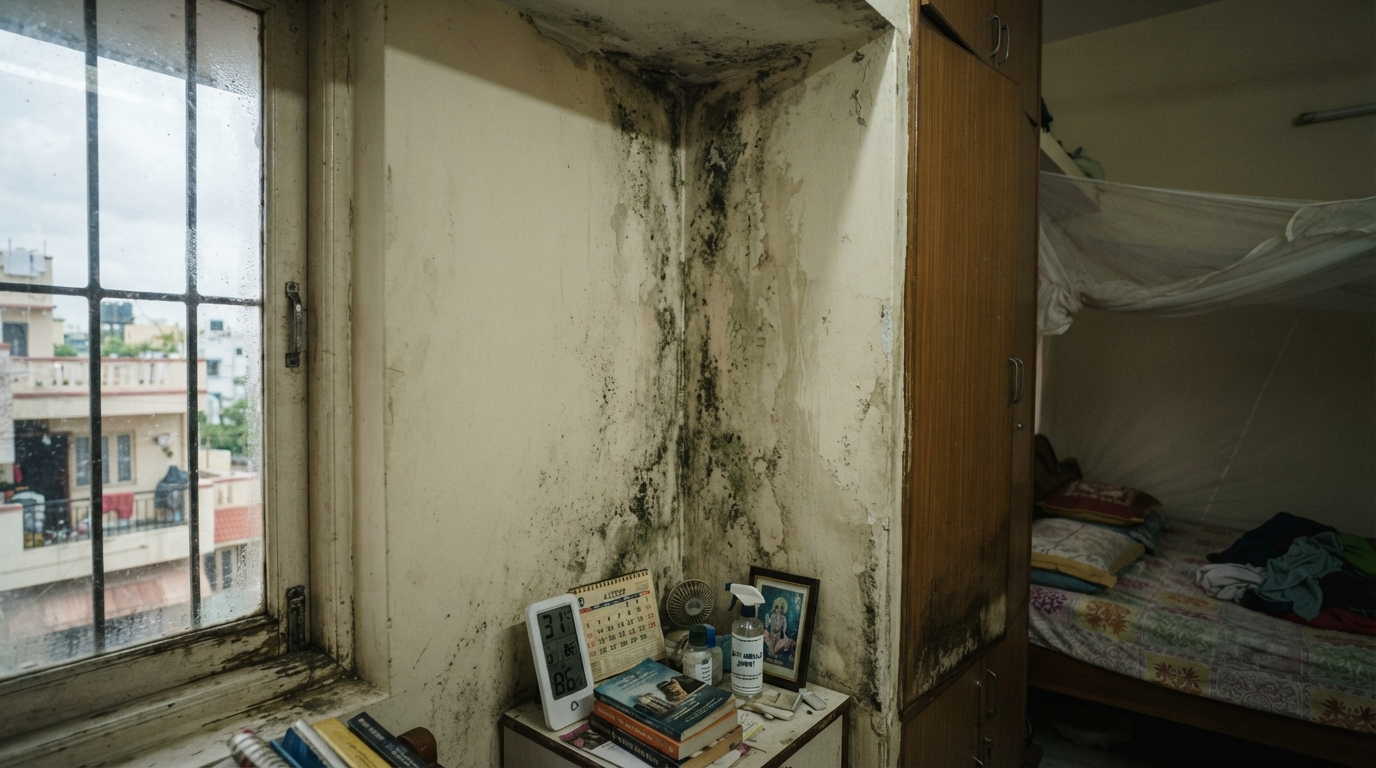
You scrub the black spots off the bathroom ceiling, and they are back in three weeks. You empty the wardrobe, wipe it down, and the musty smell returns before the month is out. Mould in Chennai homes is persistent, and after the northeast monsoon it seems to be everywhere: ceilings, wardrobe backs, window corners, the wall behind the bed.
It keeps coming back for one reason. Cleaning removes the mould you can see, but not the moisture that feeds it. Until you find and fix that moisture, every clean is temporary. This guide covers the two causes of mould in Chennai homes and how to tell them apart, how to remove mould safely, the humidity and ventilation habits that stop it returning, and a cause finder you can use on your own walls.
Why Chennai Homes Get Mould
Mould needs three things: moisture, a surface to feed on, and still air. Chennai supplies the first in abundance. The city is humid for much of the year, and after the monsoon, walls, ceilings and furniture hold moisture for weeks. Paint, plaster, wood, fabric and the dust that settles on them all feed mould. Closed rooms, wardrobes against outer walls and bathrooms without working exhaust fans supply the still air.
Health matters here, not just looks. The World Health Organization’s guidelines on dampness and mould link living in damp, mouldy homes with respiratory symptoms, asthma and respiratory infections. Children, older adults and anyone with asthma or allergies feel it most.
Condensation or Seepage: Find the Cause First
Every mould problem comes from one of two sources, and the fix is completely different for each. Condensation is moisture from inside the home, from baths, cooking, breathing and clothes drying indoors, settling on cool surfaces. Seepage is water coming through a wall or ceiling from outside: the terrace, a crack, a failed bathroom joint or a leaking concealed pipe.
A simple test helps. Tape a 30 cm square of cling film tightly to the affected wall and leave it for two days. If droplets form on the room side of the film, the moisture is coming from the room: condensation. If the wall behind the film is damp, the moisture is coming through the wall: seepage. If both, deal with seepage first.
How to Remove Mould Safely
For small patches on hard surfaces, you can do it yourself. The US Environmental Protection Agency says areas smaller than about 10 square feet, roughly a 3 by 3 foot patch, can usually be cleaned by the homeowner. Wear rubber gloves, a mask and eye protection, and keep the window open.
Scrub hard surfaces with detergent and water, or an anti-fungal cleaner, and dry them completely. Bleach can remove the stain on tiles but does little on porous plaster, and must never be mixed with other cleaners. Mouldy fabrics should be washed in hot water and dried in the sun. Soft materials that stay mouldy after cleaning, such as a swollen wardrobe back panel, are usually cheaper to replace than to save.
For larger areas, mould that returns within weeks, or mould on a ceiling below the terrace, get a professional clean and a check for the cause. A professional home deep clean removes it from every surface at once, including inside wardrobes, behind furniture and in window tracks, where small patches restart the problem.
Where Mould Grows, and What to Do About It
Each place in a Chennai home has its usual cause. Match the place to the fix.
Stop It Coming Back
For condensation, the goal is to get moisture out of the air faster than the home produces it. The US EPA recommends keeping indoor relative humidity below 60%, ideally between 30% and 50%. A basic hygrometer costs little and tells you where you stand. These habits make the biggest difference in Chennai homes:
- Run the bathroom exhaust fan for 15 minutes after every bath, with the door closed
- Use the kitchen chimney or exhaust every time you cook
- Open windows on opposite sides of the home for at least 20 minutes a day
- Dry clothes outside or on the balcony, not in bedrooms
- Leave a 5 cm gap between wardrobes and outer walls, and air wardrobes weekly
- Use a dehumidifier in rooms that stay closed, such as a locked flat or a store room
For seepage, no habit will help: the water has to be stopped. After the monsoon, run through our post-monsoon home checklist to find where water is entering, starting with terrace drains, the parapet, window frames and bathroom sealant. Once the source is repaired, let the wall dry for three to six weeks, then clean it, prime it with an anti-fungal primer and repaint.
What a Professional Mould Treatment Involves
When mould covers more than a small patch, or keeps returning, a professional treatment follows a set order. First comes the inspection: the technician maps where the mould is, checks the wall with a moisture meter, and looks at the likely sources above and around it, such as the terrace, a bathroom on the other side, or a concealed pipe. Without this step, the rest is cosmetic.
Next, the affected rooms are prepared. Furniture is moved away from walls, wardrobes are emptied, and floors are covered. The mould is then cleaned from every surface with an anti-fungal cleaner, including the places people miss: the back panels of wardrobes, the tops of door frames, window tracks, exhaust fan grilles and the gap behind the bed. Fabrics are sent for washing and drying in the sun. Porous materials that have stayed mouldy, such as a swollen plywood panel or a stained false ceiling tile, are listed for replacement rather than cleaned and left.
Then the cause is fixed. For condensation, that may mean repairing or adding an exhaust fan, opening a blocked ventilator, or simply changing how the room is used. For seepage, it means repairing the terrace crack, resealing the bathroom, or fixing the leaking joint. Only after the wall has dried, usually three to six weeks later, is it primed with an anti-fungal primer and repainted. Skipping that wait is the single most common reason a freshly painted wall goes black again before the next monsoon.
Finally, the home is checked again a few weeks later. A small return of spots at that point tells you the moisture is not fully solved, and it is far cheaper to catch it then than after the room has been repainted.
Find Your Likely Cause
Tick what is true for the mould in your home, and the finder will suggest whether condensation or seepage is more likely, and what to do first.
Mould in Rented and Vacant Homes
A flat that stays closed is where mould grows fastest. With no airing, no exhaust fans running and no one to notice a slow leak, a vacant flat can grow mould across walls and wardrobes in a single monsoon. Owners who live abroad often discover it only when a tenant leaves or they visit. Regular inspections, with windows opened and fans run on each visit, prevent most of it.
In rented homes, responsibility follows the cause. Mould from a tenant drying clothes in a closed bedroom is a habit to fix. Mould from seepage through the slab, walls or concealed pipes is a structural or plumbing problem, which falls on the landlord under Tamil Nadu’s 2017 tenancy Act. Our property management in Chennai includes inspections that catch damp early, and our kitchen and bathroom deep cleaning covers the places mould hides.
Fix the Moisture, Not Just the Mould
Mould is a symptom. Clean it safely, then find out whether it is condensation or seepage, and fix that. Keep humidity below 60%, keep air moving, and stop water getting in from outside. Do those three things and the black spots stop coming back.
Since 1995, RAPRO has looked after homes for more than 1,000 owners across 10+ countries, and we are rated 4.8 from 415+ reviews. Call +91 72999 14181, email enquiry@rajamproperty.in, or send us a message.



FAQ
Frequently asked questions
Everything you need to know about our consulting and AI solutions — from strategy to implementation.
Who fixes mould caused by seepage in a rented flat?

Should I paint over mould?
What humidity level stops mould?
Does vinegar or bleach kill mould on walls?
Can I remove mould myself?
Is mould on walls harmful to health?
Why does mould keep coming back after I clean it?