

Deep Cleaning vs Regular Cleaning: What’s the Difference? (2026)

Repair and Maintenance
Post-Monsoon Home Checklist for Chennai: 15 Things to Check (2026)
The northeast monsoon brings most of Chennai’s yearly rain between October and December, and the damage shows up after it ends. This checklist walks through 15 checks, from terrace drains to switchboards, explains what each warning sign means, and sets out what to fix first.

Chennai gets most of its rain in a few weeks. The northeast monsoon, which runs from October to December, brings the bulk of the city’s yearly rainfall, often in heavy spells that drop more water in a day than some months see in total. Homes take that in quietly. The damage rarely announces itself during the rain; it shows up a few weeks later as a brown stain on a ceiling, a wardrobe that smells of damp, or a switch that feels warm to the touch.
That is why the weeks after the monsoon are the most useful time of the year to check a home. The marks are still fresh, the cause is still easy to trace, and most problems are still small. This guide covers the 15 checks we run in every home after the rains, what each warning sign usually means, which problems to fix first, and a self-check tool you can use as you walk through your own flat or house.
Why the Weeks After the Monsoon Matter
Water damage grows in steps. A blocked terrace outlet holds water on the slab after every shower. The water finds a hairline crack, soaks into the plaster, and appears as a damp patch on the ceiling below. Left alone, the patch spreads, the paint bubbles, white salts push through the surface, and in time the steel inside the concrete starts to rust. Each step costs more to fix than the one before it.
The India Meteorological Department tracks the northeast monsoon as the main rainy season for coastal Tamil Nadu. Unlike most of India, Chennai’s wettest months are October and November, which means the city’s checking season is December and January, not July. If you own a home here, put a post-monsoon check in your calendar every December.
Terrace, Roof and Balconies
The terrace is where most monsoon damage starts. Check every drain outlet for silt, leaves and plastic, and look for water still standing a day after rain. Walk the parapet and look for cracks where the parapet wall meets the slab, a common entry point. Check sunshades and balcony edges for cracks and pooled water. In apartments, terrace drains are usually the association’s responsibility, so report blocked outlets in writing; if water from a common terrace is entering your flat, that record matters.
Storm water drains outside the building are maintained by the Greater Chennai Corporation. If water backs up from the street into your compound, raise a complaint with the corporation as well as fixing anything inside your plot.
Walls, Ceilings and Frames
A damp patch tells you where water is arriving, not always where it comes from. A patch near a ceiling corner usually points to the terrace or a bathroom above. A patch under a window usually points to a gap in the frame or a crack in the sunshade. White powder on a wall, called efflorescence, means water has been moving through the masonry and leaving salts behind. Bubbling paint means the moisture is trapped behind it.
Mark each patch with a pencil line and a date. If it grows over the next two weeks, water is still getting in. If it stays the same and fades, the wall is drying. This simple test saves owners from repainting a wall that is still wet.

Electrical Safety After the Rains
Water and electricity are the one combination that turns a repair into a safety problem. Walk past every switchboard on a wall that showed damp during the rains, and stop using any switch or socket that shows one of these signs until an electrician has checked it:
- It feels warm to the touch
- It buzzes, crackles or sparks when used
- It smells of burning plastic
- It has brown or black marks around it
- The power trips when it is switched on
Switch that circuit off at the distribution board until it has been checked.
Then test the RCCB, the safety switch in your board that cuts power when current leaks, for example through a damp wall or a faulty appliance. Press its test button once. The power should cut instantly. Switch it back on, and if it did not trip, call an electrician the same day. Do this every month, not just after the monsoon. For supply problems or damaged service lines, contact TNEB, not a private electrician.
Water, Plumbing and Storage
Floodwater and heavy rain can reach the sump through a cracked lid or a low inlet, so check the sump and overhead tank for muddy water, cracked lids and mosquito larvae, and have them cleaned if the water has changed colour. Check under every sink for drips and a swollen cabinet base, and check the walls behind bathrooms for damp on the far side, which usually means the silicone sealant has failed. Chennai Metrowater handles supply and sewer problems outside your property; anything after the meter is yours to fix.
Open every wardrobe. A musty smell or white and green spots mean mould has started. Empty the wardrobe, clean it, let it dry with the doors open for a day, and put moisture absorbers inside. The US Environmental Protection Agency notes that the key to mould control is moisture control: clean the mould, but fix the damp or it will return.
What to Fix First
When the list feels long, sort it by risk rather than by cost. Stop water coming in first, because every other repair depends on it. Deal with electrical risks next, because they affect safety. Then clean mould and stagnant water, which affect health. Leave painting and cosmetic work until the walls have dried, usually three to six weeks after the rains stop.
Check Your Own Home
Use this self-check as you walk through your home. Tick each item you have checked and found clear; the tool lists what is still to do.
Landlords, Tenants and Owners Living Abroad
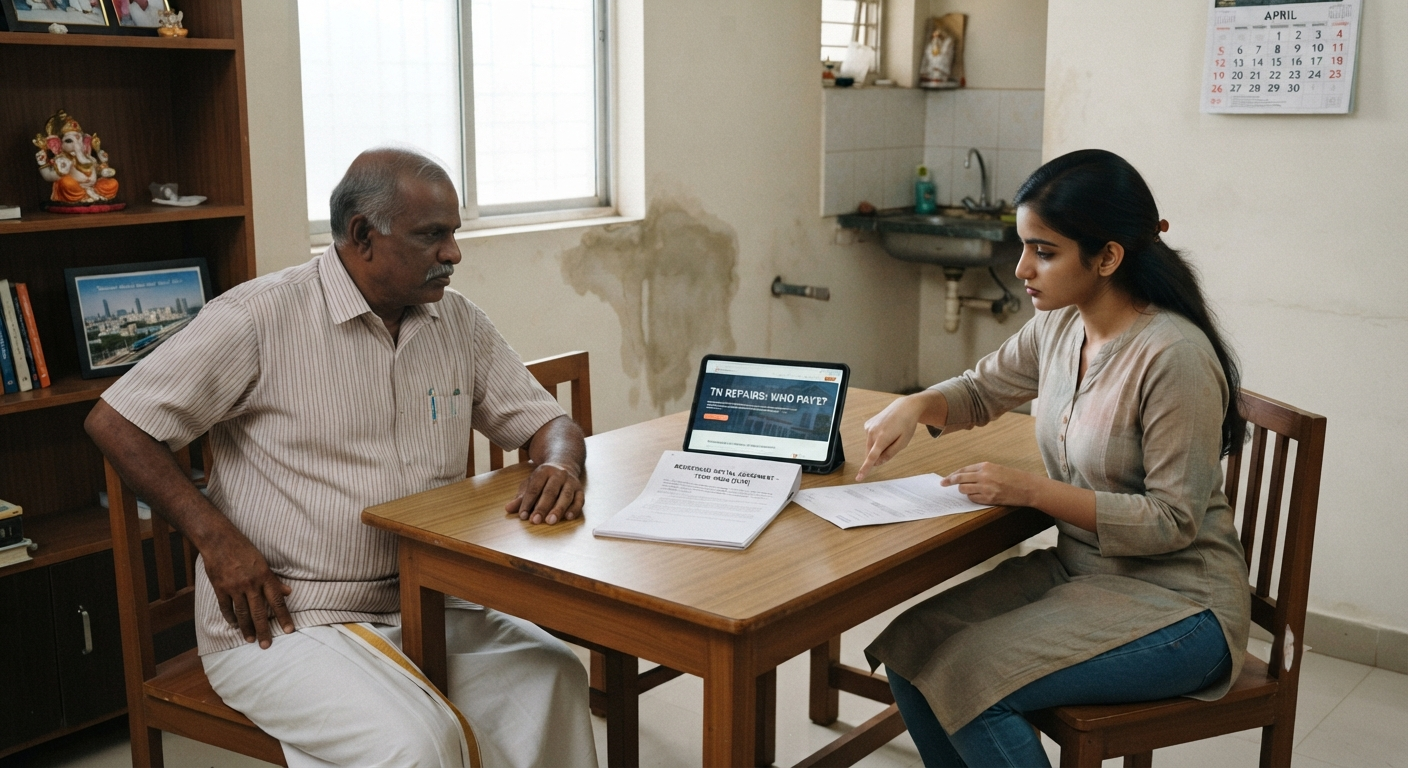
In a rented flat, who pays depends on the repair. Under Tamil Nadu’s Regulation of Rights and Responsibilities of Landlords and Tenants Act, 2017, structural repairs, plumbing and wiring fall on the landlord, while tenants handle minor repairs such as taps and switches. Seepage from the slab, walls or concealed pipes is almost always the landlord’s responsibility. Tenants should report damp in writing as soon as they see it, and landlords should act on it quickly, because a damp flat is hard to let and easy to lose a good tenant over.
For owners who live abroad, the monsoon is the time when an empty or rented flat most needs someone to look at it. If nobody checks, a small leak can run for months. Our property management in Chennai includes inspections with photo reports, and a post-monsoon check is one of the most useful visits of the year. If the flat needs a full reset after the damp has been fixed, a professional home deep clean takes care of mould, grit in the tracks and the musty smell the rains leave behind.
When the check turns up repairs, our home repair and maintenance service quotes each job before work starts and sends photos when it is done.

Make December Your Checking Month
The monsoon does its damage quietly, and the weeks after it are when that damage is cheapest to fix. Walk the 15 checks, fix water entry first and electrical risks second, wait for walls to dry before painting, and keep a dated record of what you found. Do it every December and your home will spend far less time, and money, recovering from the rains.
Since 1995, RAPRO has looked after homes for more than 1,000 owners across 10+ countries, and we are rated 4.8 from 415+ reviews. Call +91 72999 14181, email enquiry@rajamproperty.in, or send us a message.


FAQ
Frequently asked questions
Everything you need to know about our consulting and AI solutions — from strategy to implementation.
Does RAPRO inspect homes after the monsoon?

Who should fix seepage in a rented flat?
How often should terrace drains be cleaned in Chennai?
Is it safe to use switches on a damp wall?
Can I repaint a wall right after the rains?
How do I know if a damp patch is seepage or condensation?
When should I check my home after the monsoon in Chennai?